The Backyard That Stopped Working: Why Your Outdoor Space Feels Like Wasted Square Footage
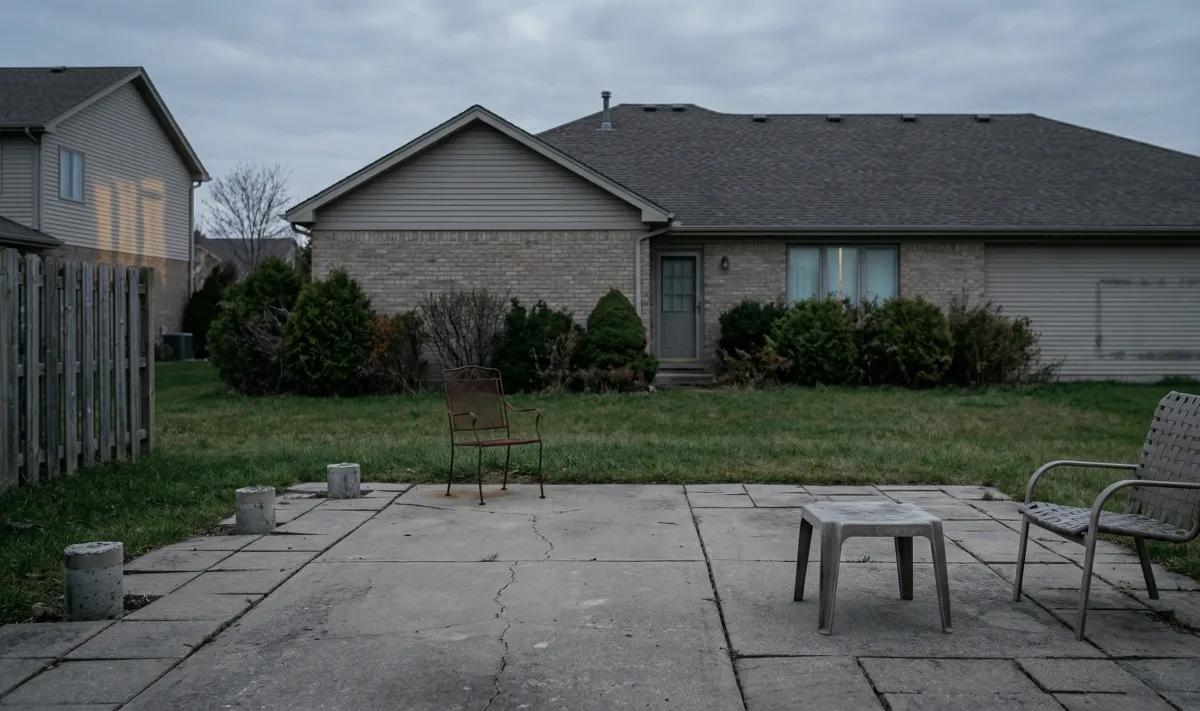
There is a moment that visits nearly every homeowner at least once a year, and it usually arrives on a Saturday morning in late spring. You step through the back door with a cup of coffee, look out across the patio, and feel something you cannot quite name. It is not anger. It is not disappointment, exactly. It is something quieter than that, more persistent; the soft, nagging awareness that the outdoor space you are standing in does not feel the way you imagined it would when you signed the mortgage papers. The furniture is out there. The potted plants are trying their best. The grill sits in its usual corner like a loyal appliance waiting for its twice-monthly assignment. And still, the space feels flat. Undefined. Like a room that never got finished, because technically, it never was one.
This is what it looks like when your backyard stops working. Not because something broke, but because something was never built in the first place. The outdoor living space that was supposed to be the reason you chose this house has become the part of the house you walk past on the way to the kitchen. And the most frustrating part is that you cannot point to a single broken thing. Everything is technically there. Nothing is actually complete.
You are not alone in this. Across every suburban residential hub in North America, there are thousands of homeowners staring at patios that feel more like afterthoughts than extensions of their homes. The backyard renovation conversation has been on their list for two, maybe three summers now. But the list stays a list, because the problem is hard to define when everything looks fine from a distance.
Explore what's possible for your outdoor living space at NextGen Screens
The Square Footage You Are Already Paying For
Here is a number that most homeowners never calculate but should. Take the total square footage of your outdoor living space, the patio or deck or lanai, and multiply it by the average cost per square foot in your area. In most suburban markets across North America, that number represents somewhere between forty thousand and eighty thousand dollars of real estate. That is not a hypothetical figure. That is property you are paying for through your mortgage, your property taxes, and your maintenance schedule every single month.
Now ask yourself how many months out of the year you actually use that space comfortably. If you live in a seasonal climate zone, the honest answer is often four months. Sometimes three. If you factor in the afternoons that are too hot, the evenings the bugs reclaim, and the weekends the weather cancels, the number shrinks even further. You might be looking at two hundred usable hours out of more than four thousand waking hours in a year. That is a return on investment that would make any financial advisor wince.
The problem is not that the square footage exists. The problem is that it sits dormant for the vast majority of the year, producing no lifestyle value, no family memories, no Saturday evenings worth remembering. It is the most expensive unused room in your house, and it does not even have a ceiling.
Discover innovative screening solutions at NextGen Screens
Why "Flat" Feels Wrong: The Psychology of Overhead Structure
There is a reason that every outdoor space you have ever loved, every restaurant patio that made you linger over dessert, every resort cabana that made you whisper "we should do this at home," every friend's backyard that made you quietly jealous; there is a reason all of those spaces had something yours does not. They had structure overhead.
This is not a design preference. It is wired into how the human brain processes space. Environmental psychologists have studied this for decades, and the findings are consistent: people feel more comfortable, more relaxed, and more willing to stay in spaces that have some form of overhead shelter. Not a closed roof. Not a box. Just the suggestion of enclosure, the architectural signal that says, "This is a place. You are meant to be here. Stay."
A bare patio, no matter how well furnished, lacks that signal. It reads to the brain as transitional space, the kind of area you pass through on your way to somewhere else. An open patio has no vertical identity, no sense of proportion, no psychological cue that tells you this is a destination rather than a corridor. That is why your patio feels unfinished even though you have done everything you can think of to make it work. The furniture, the string lights clipped to nothing, the umbrella that blows over in the wind; these are attempts to solve an architectural problem with accessories. And accessories, no matter how tasteful, cannot substitute for structure.
A pergola changes the equation entirely. It provides the overhead presence that transforms flat, formless outdoor square footage into a defined outdoor room. Beams overhead, columns at the corners, spatial boundaries that tell the brain: this is not a patio anymore. This is a room.
See how pergolas integrate with motorized screens at Onetrack Screens
The Indoor-Outdoor Disconnect Nobody Talks About
Walk through your home and notice the moment the quality drops. For most homeowners, it happens at the back door. On one side, there is a kitchen that took months to design, a living room that reflects real taste and intentional investment, maybe a recent renovation that you are justifiably proud of. On the other side of that glass, there is a concrete slab with a table on it.
The transition is jarring, and it bothers homeowners more than they realize. You may not think about it consciously. But every time you look through those back windows, every time a guest steps outside and the atmosphere shifts from curated to generic, there is a small dissonance that registers. The backyard feels like it belongs to a different house. A lesser house. And that feeling, over time, becomes a quiet source of frustration that you might attribute to the wrong causes; the wrong furniture, the wrong landscaping, the wrong layout. When the real issue is the absence of architectural continuity between inside and out.
Modern home design has been moving toward open floor plans and indoor-outdoor flow for the last decade. Large sliding glass doors, accordion walls, great rooms that face the yard; these are among the most sought-after features in residential real estate. But that design intent only delivers on its promise if the outdoor space meets the interior halfway. A fifty-thousand-dollar kitchen remodel that looks out onto a bare patio is an investment that contradicts itself every time you open the door.
A pergola does not just add shade to a patio. It extends your home's architectural vocabulary outdoors. The lines, materials, and proportions create visual continuity between your interior and your exterior. When someone walks through your home and steps outside, they do not see a patio anymore. They see an outdoor room that belongs to this home, that tells the same story of intention and care that the rest of the house tells.
Learn more about premium outdoor protection with Maxforce Screens
What Resorts, Restaurants, and Your Neighbor Already Know
Think about the last time you sat under a covered outdoor structure at a restaurant and thought, "I could stay here all night." Think about that resort in the mountains or on the coast where the outdoor seating area felt like the best room on the property. Think about the friend whose backyard made you pull out your phone and take a picture, even though you told yourself you were just capturing the sunset.
Every one of those spaces was designed around a simple principle that the outdoor living space industry has understood for decades but homeowners are only beginning to discover: the experience starts with the structure, not the furniture.
Restaurants do not set a table on an open sidewalk and call it an outdoor dining experience. They build a pergola, hang lights from the beams, add fans for airflow, and create an environment that makes you forget you are technically outside. Resorts do the same. So does your neighbor who installed a pergola last spring and now hosts dinner parties every Saturday while you eat inside because the bugs drove you in by seven o'clock.
The backyard renovation you have been considering is not really about adding a product to your patio. It is about creating a room that did not exist before. A room with shade when you want it, airflow when you need it, lighting that sets a mood, and the option to add screens that drop down and eliminate the insects without eliminating the view.
That last part is important. Because a pergola is not the end of the conversation. It is the beginning.
Check out the full resource library at NextGen Screens
The Domino Effect: One Structure, Every Upgrade Unlocked
Here is what most homeowners do not realize until they start researching outdoor living space improvements: a pergola is not just a shade structure. It is the foundational platform that makes virtually every other outdoor upgrade possible.
You cannot mount ceiling fans without a ceiling. You cannot hang string lights without beams to string them from. You cannot install motorized retractable screens without a structure to mount the housing. You cannot add outdoor heaters for the shoulder seasons without something overhead to radiate the heat downward. You cannot integrate a misting system for those brutal August afternoons without a framework to run the lines.
Without a pergola, every one of those upgrades is either impossible or requires its own freestanding infrastructure, which creates a cluttered, piecemeal look that defeats the purpose of improving the space. With a pergola, every one of those upgrades becomes a simple addition to an existing platform. The fans hang from the beams. The lights string across the rafters. The screens mount to the structure and retract invisibly when they are not needed. The heaters clip into place. The misting lines disappear along the overhead framework.
This is what the outdoor living space industry calls the "foundation plus" model. The pergola is the foundation. Everything else is the plus. And the beauty of this model is that you do not have to do everything at once. You build the pergola this year. You add the screens next spring. You install the fans and lights the following summer. Each addition builds on the structure that is already there, compounding the comfort, the usability, and the value of the space season over season.
The pergola for patio that you are considering is not one purchase. It is the single investment that unlocks an entire ecosystem of outdoor living improvements that would otherwise be impossible.
Discover how Onetrack integrates seamlessly with pergola structures at Onetrack Screens
From Wasted Space to Outdoor Room: The First Conversation
There is a version of next summer where you step through the back door and everything feels different. The overhead beams filter the light. A fan circulates a gentle breeze overhead. The space has boundaries, proportion, a sense of identity that it never had before. In the evening, the string lights come on and the screens drop down, and the bugs that used to end every outdoor evening by seven are simply no longer a factor. You sit down. Your family sits down. Nobody goes inside until they are ready for bed.
That version of next summer starts with a conversation this season. Not a sales pitch. Not a pressure call. A conversation about your space, your vision, and the sequence of improvements that will get you from where you are to where you want to be.
The homeowners who are already enjoying their outdoor living spaces did not get there by accident. They got there because they recognized a truth that is both simple and easy to overlook: a patio without structure is not an outdoor room. It is outdoor square footage. And there is a meaningful difference between the two.
Your backyard has not stopped working because something is broken. It stopped working because something was never built. The foundation that transforms a patio into a living space, the overhead structure that tells the brain "this is a room," the platform that makes every future upgrade possible; that is what has been missing. And it has a name.
If you are ready to explore what a pergola can do for your specific space, or if you simply want to understand the options before committing to anything, the resource library at NextGen Screens is the most comprehensive starting point available. From technical specifications to design inspiration, from motorized screen integration to the engineering behind wind-rated structures, the information is there for homeowners who believe that being informed is not optional.
It is everything.
Start exploring the complete outdoor living ecosystem at NextGen Screens
Discover Onetrack's motorized screen systems at Onetrack Screens
Learn about hurricane-rated protection with Maxforce Screens